
AI keynote speaker · London · Available internationally

Most AI speakers
have opinions.
This one wrote
the standard.

Matthew Blakemore is one of four people who co-authored ISO/IEC 8183, an international standard now published in 34 countries.

The AI circuit is full of futurists, ex-somethings and people with a slide about the singularity. Very few of them have ever sat in the room where the rules were argued over, line by line, for three years. He has. Every claim on this page links to a document you can check.

1 of 4People who drafted
ISO/IEC 8183
34Countries where that
standard is now national
BSI & ISOCommittee member, where
the rules get written
0Slides about
the singularity

Why him

The difference between commentary and authorship.

Almost every AI talk you have sat through was assembled from the same public material: a few papers, a few headlines, a chart of parameter counts. It is why they blur together, and why nobody in the room writes anything down.

A standards editor has a different relationship with the subject. He knows what the text says, what it nearly said, which country objected, and where the committee deliberately left the ambiguity in. That is not a better opinion. It is a different category of knowledge, and audiences can hear the difference within about ninety seconds.

He knows what the words mean

“Trustworthy AI”, “frontier”, “high-risk”, “provider”: every one of those is a defined term that somebody had to negotiate. He was in the negotiation. When your audience asks what a word means, they get the answer rather than a paraphrase of a blog post.

He is not selling fear

The two default AI keynotes are “everything changes tomorrow” and “we are all doomed”. Both are entertaining and neither survives contact with a Monday morning. The standards view is unglamorous and useful: here is what is already obligatory, here is what is coming, here is what you do about it.

He gives you something to do

He created the Snakes and Ladders AI Framework® because boards kept asking the same question after every AI briefing: so what do we actually do? A talk that ends with a board knowing its next three moves is worth more than one that ends with applause.

There is a simple test for any AI speaker, and it costs nothing to apply. Ask them which standard or clause they would point a nervous general counsel at, and watch what happens. Most reach for a principle. He will give you a number, an edition and a clause reference, and then explain why that clause is worded the way it is.

The talks

Six talks. All of them tailored.

Every one is rebuilt for the room: a board hears something different from a room of engineers, and a conference audience different again. These are the starting points, not the scripts. Select any one.

Rebuilt for the room every time, and the governance material is updated as the standards move, which is often.

Matthew Blakemore, co-author of ISO/IEC 8183 and member of the BSI and ISO artificial intelligence committees

The proof

Every claim here links to something you can check.

Speaker pages are full of unfalsifiable adjectives. This one is not. Each credential below points at a document, a committee or a public register. Several of them point to full reference sites that exist precisely so nobody has to take his word for it.

Standards authorship Co-author and sub-editor, ISO/IEC 8183 The international standard defining the data life cycle for AI systems: ten stages from idea conception to decommissioning. Four people co-authored it. He is one of them, and the ISO/IEC 5259 series takes its life cycle directly from it. The standard, in full
Committee membership BSI ART/1 and the ISO AI committees ART/1 is the UK national mirror committee for ISO/IEC JTC 1/SC 42, the subcommittee that produced 42001, 8183, 5259, 23894, 42005 and most of the AI standards landscape. It is where the British position is formed and the British vote is cast. How AI standards get made
The certifiable standard ISO/IEC 42001 practitioner The AI management system standard: the only one you can hold a certificate for, and the one your buyers are starting to ask about. He works on the committees that produced it and implements it commercially. 42001 explained
Regulation EU AI Act and UK AI law The Act's high-risk regime is waiting on the standards his committees write. That is an unusual vantage point on a regulation whose timetable is now tied to a standards programme rather than to a date. Governing AI in a world of new rules
Public advisory Innovate UK BridgeAI Adviser to the UK's national programme for helping organisations in priority sectors adopt AI responsibly.
Original work The Snakes and Ladders AI Framework® His own framework: ten life cycle stages against ten cross-cutting governance processes, and the hundred squares in between. Built on ISO/IEC 8183's structure, with the snakes marked before you land on them. The forthcoming book of the same name is co-authored with Dr Angus Finney.

To be added by the client. Past engagements, client logos, testimonials, video and audience numbers are deliberately absent from this build. Every other claim on this page was verified before it was written, and inventing a speaking history would have undermined the one thing that makes the page work. See the deployment notes for where to add them.
Who books him

Rooms where the questions are already hard.

Not the room that wants to be amazed by AI. The room that has already deployed some, has a procurement questionnaire it cannot answer, and a general counsel who has started asking about the EU AI Act.

Boards and executive teams

Directors who are accountable for AI decisions they do not fully understand, and who need to know what “reasonable steps” looks like before somebody asks them in a deposition. Usually 45 minutes, usually followed by the longest Q&A of the day.

Conferences and industry events

A keynote that is not the fourth “AI will change everything” of the morning. Standards and regulation are the two subjects every AI conference needs and nobody wants to programme, because most speakers make them boring. That is a solvable problem.

Regulated sectors

Financial services, health, legal, public sector, insurance. Anywhere a regulator already exists and has started to ask what your model does. These audiences do not want inspiration; they want to know which document answers the question.

Internal programmes and away-days

Where a leadership team has to actually decide something afterwards. This is where the Snakes and Ladders board earns its place: the room leaves with its own hundred squares marked up rather than a photograph of a slide.

Formats

However long you have.

Based in London, available across the UK and internationally, and comfortable in any of these. The content is rebuilt for the format: a 20-minute keynote is not a 90-minute workshop with bits cut out.

20–45 minKeynote. One argument, made properly, with room for questions. The most common booking.
60–90 minMasterclass or board session. Enough time to work through a real system rather than describe one.
Half or full dayWorkshop. The room leaves with its own framework marked up and a decision made.
Panel & chairPanellist, moderator or fireside. Also comfortable being the person who disagrees.

What he needs

A conversation about the audience first: who they are, what they have already deployed, and what they are frightened of. Ten minutes on the phone changes the talk more than any brief document.

What you get

A talk built for your room, delivered without notes, and a Q&A where the answers are specific. Slides supplied in advance if your AV team needs them, and he is entirely happy to be recorded.

Fees

Indicative bands are shared on the enquiry call, and exact pricing follows in a written proposal once the format, audience and travel are known. Rates differ for commercial conferences, public sector and charity, and there is always room for a conversation.

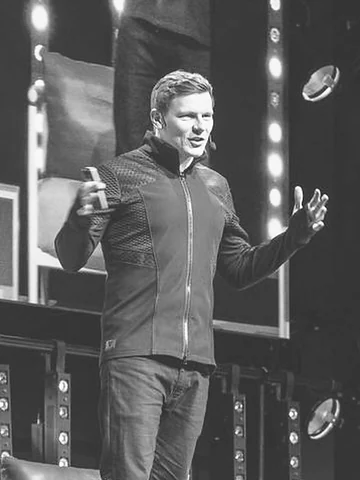
Matthew Blakemore, AI keynote speaker, co-author of ISO/IEC 8183 and member of the BSI and ISO artificial intelligence committees

Booking

Check availability

The quickest route is a ten-minute call about the audience. Tell him who is in the room, what they have already deployed and what they are worried about, and he will tell you whether he is the right speaker for it, including when he is not.

Enquiries, dates and fees go through AI Caramba! Speaking engagements in the UK and internationally; based in London.

  • EnquiriesThrough AI Caramba! at matt@aicaramba.co.uk, UK and international
  • BasedLondon, United Kingdom · travels for events
  • FormatsKeynote, masterclass, board session, workshop, panel, chair
  • StandardCo-author and sub-editor, ISO/IEC 8183, Data life cycle framework
  • CommitteesMember, BSI ART/1 and the ISO artificial intelligence committees
  • BookSnakes and Ladders: A Leader's Playbook for AI Strategy, Governance and Risk (forthcoming)

Questions

Booking an AI speaker, answered.

Who is Matthew Blakemore?

An AI keynote speaker, standards practitioner and Chief Executive of AI Caramba!, based in London. He is one of four people who co-authored ISO/IEC 8183, the international standard defining the data life cycle for AI systems, and a member of the BSI and ISO artificial intelligence committees, including BSI's ART/1, the UK mirror committee for ISO/IEC JTC 1/SC 42.

He is also an adviser to the Innovate UK BridgeAI programme, originator of the Snakes and Ladders AI Framework®, and co-author of the forthcoming Snakes and Ladders: A Leader's Playbook for AI Strategy, Governance and Risk.

What makes him different from other AI speakers?

Authorship rather than commentary. Almost every AI talk is assembled from the same public material: a few papers, a few headlines, a chart of parameter counts. A standards editor knows what the text says, what it nearly said, which country objected, and where the committee deliberately left the ambiguity in.

There is a simple test you can apply to any AI speaker for free: ask which standard or clause they would point a nervous general counsel at. Most reach for a principle. He will give you a number, an edition and a clause reference, and then explain why it is worded that way.

What does he speak about?

Six starting points, all rebuilt for the room: the Snakes and Ladders framework for AI strategy, governance and risk; the EU AI Act as it actually stands; ISO/IEC 42001 and what certification really proves; how AI rules genuinely get made, from inside the committees; AI governance for boards and directors; and data quality: why most AI failures are data failures wearing a costume.

A board hears something very different from a room of engineers. The topics are starting points, not scripts.

How much does it cost to book an AI speaker?

It depends on format, audience, location and travel, and anyone quoting a number before asking about those is guessing. Indicative bands are shared on the enquiry call and exact pricing follows in a written proposal once the shape of the event is known.

Rates differ for commercial conferences, public sector and charity work, and there is always room for a conversation. A twenty-minute keynote in London and a full-day workshop overseas are not the same commercial proposition.

Is he available outside the UK?

Yes. He is based in London and speaks across the UK and internationally. International events are booked through AI Caramba! and the practicalities (travel, timing, recording rights) are agreed in the written proposal rather than left to the week before.

What formats does he do?

Keynotes of 20 to 45 minutes, masterclasses and board sessions of 60 to 90 minutes, half-day and full-day workshops, and panels either as a participant or as chair. Content is rebuilt for the format: a 20-minute keynote is not a 90-minute workshop with the middle cut out.

He is comfortable being recorded, will supply slides in advance for your AV team, and is equally happy to be the person on the panel who disagrees.

What is the Snakes and Ladders AI Framework?

His own framework, and the reason many organisations book him. It sets ten AI life cycle stages against ten cross-cutting governance processes, producing a hundred squares, each one a question somebody in your organisation ought to be able to answer, with the snakes marked before you land on them.

Its structure comes from ISO/IEC 8183, the standard he helped draft, which is why it maps onto the international standards rather than competing with them. The forthcoming book of the same name is co-authored with Dr Angus Finney.

Can he tailor a talk to our sector?

That is the default, not an upgrade. Every talk starts with a conversation about who is in the room, what they have already deployed and what they are frightened of. Ten minutes on the phone changes the talk more than any brief document.

Financial services, health, legal, public sector and insurance audiences all get a different version, because in each of those a regulator already exists and has already started asking questions.

Is ISO/IEC 8183 a real standard, and does it matter?

Yes to both, and the second half is the interesting part. ISO/IEC 8183 was published by ISO and IEC on 26 July 2023 and adopted across Europe as EN ISO/IEC 8183:2024 without a word changed, which obliged the national standards bodies of 34 countries to publish it as a national standard and withdraw anything conflicting. Canada adopted it too.

It matters because it is foundational: ISO/IEC 5259's data quality life cycle is derived directly from it, and ISO/IEC 42001's data controls assume it. Four people drafted it. The full picture ›

Does he only talk about compliance?

No, and a talk that treats governance as paperwork deserves the audience it gets. The argument he actually makes is commercial: standards are how you sell into regulated markets, how you answer the procurement questionnaire that decides your shortlist, and how you deploy AI faster than a competitor who is still arguing about whether they are allowed to.

Compliance is the floor. The talk is about the building.

How do I check any of this?

Please do. The page is built so you can. ISO/IEC 8183 is on iso.org and its drafting editors are a matter of record. BSI publishes its committee structures. Innovate UK publishes BridgeAI. And every standard referenced here has a full independent reference site listed in the footer, written by him, which stands or falls on its accuracy.

That is the point of a speaker who works on standards. The claims are checkable, and a speaker whose claims are checkable is a different proposition from one whose claims are adjectives.

Beyond the stage

The talk is usually where it starts.

Most rooms that book a talk about AI governance discover, somewhere in the Q&A, that they have a project rather than a curiosity. When that happens there are two doors, and a team behind them.